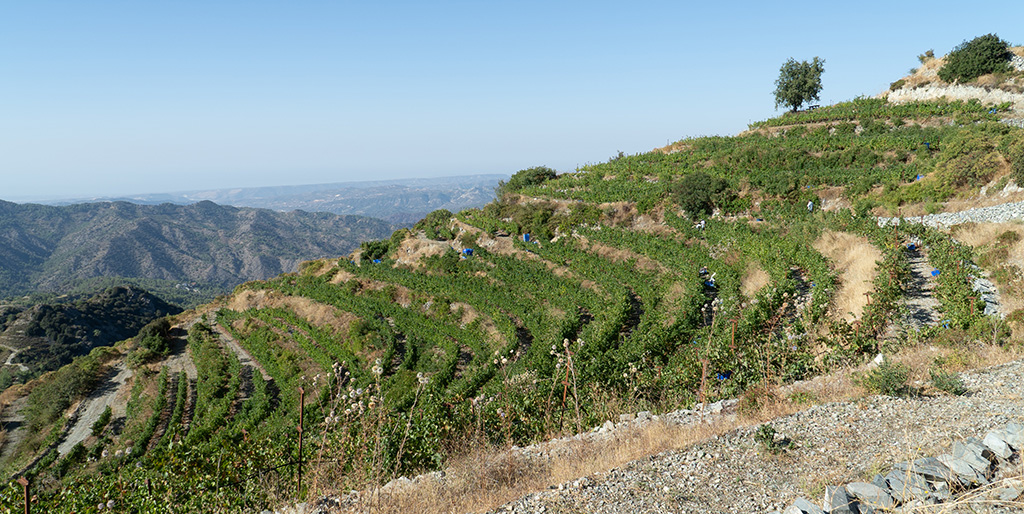
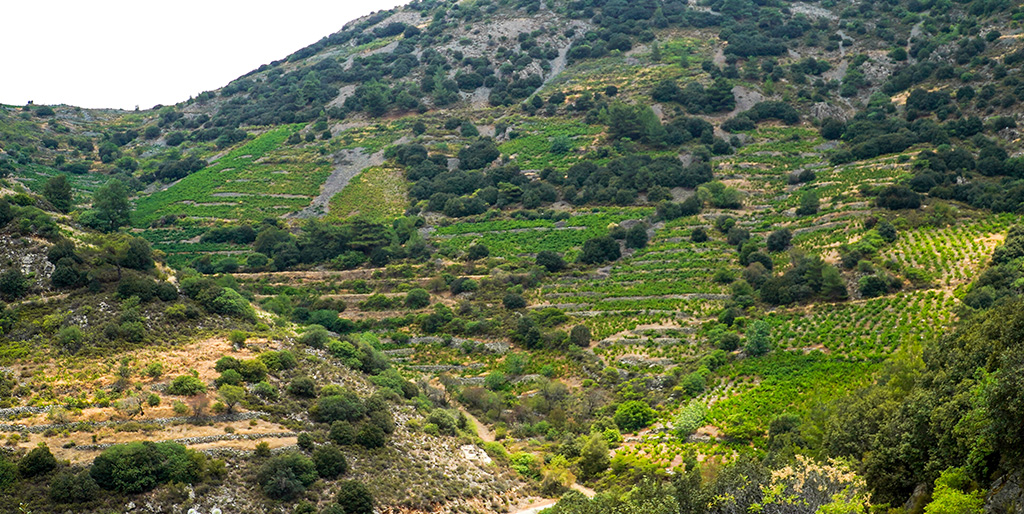
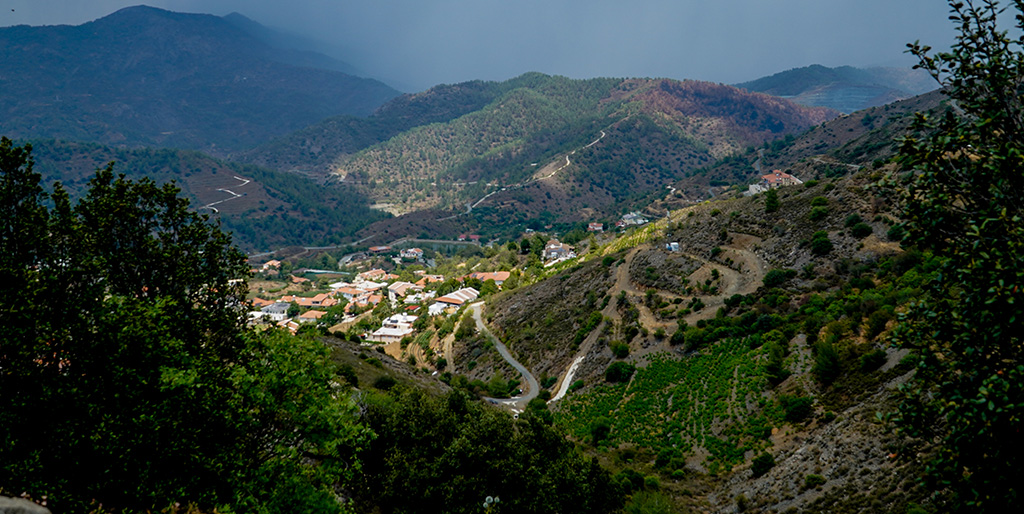
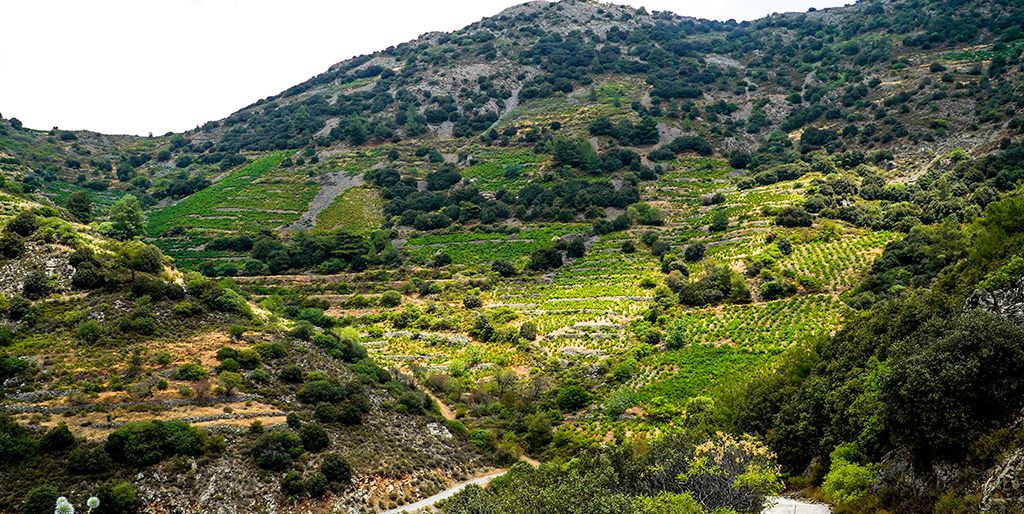
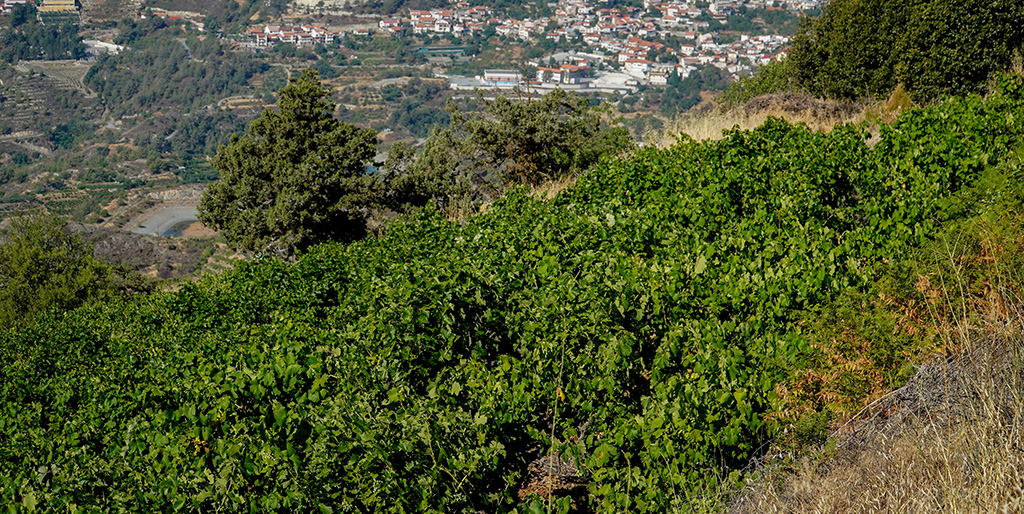
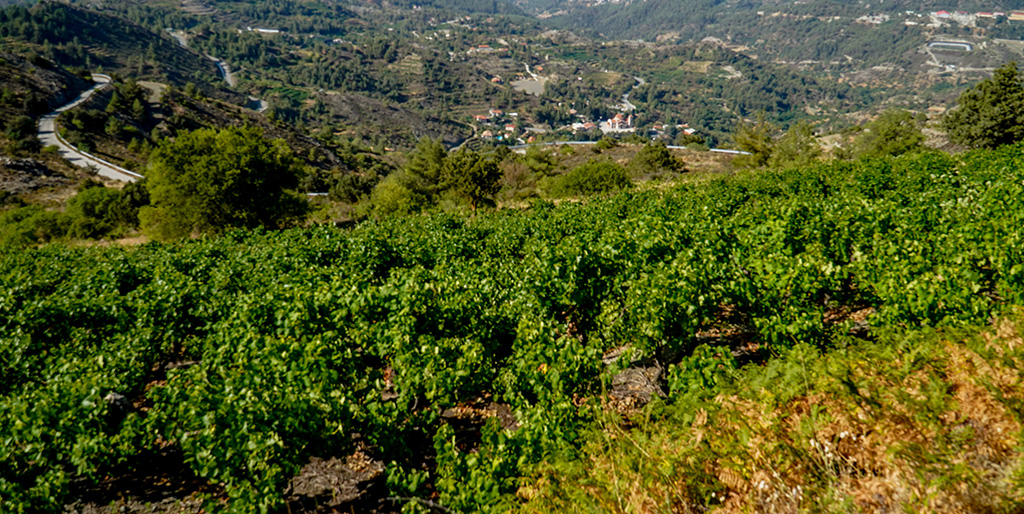
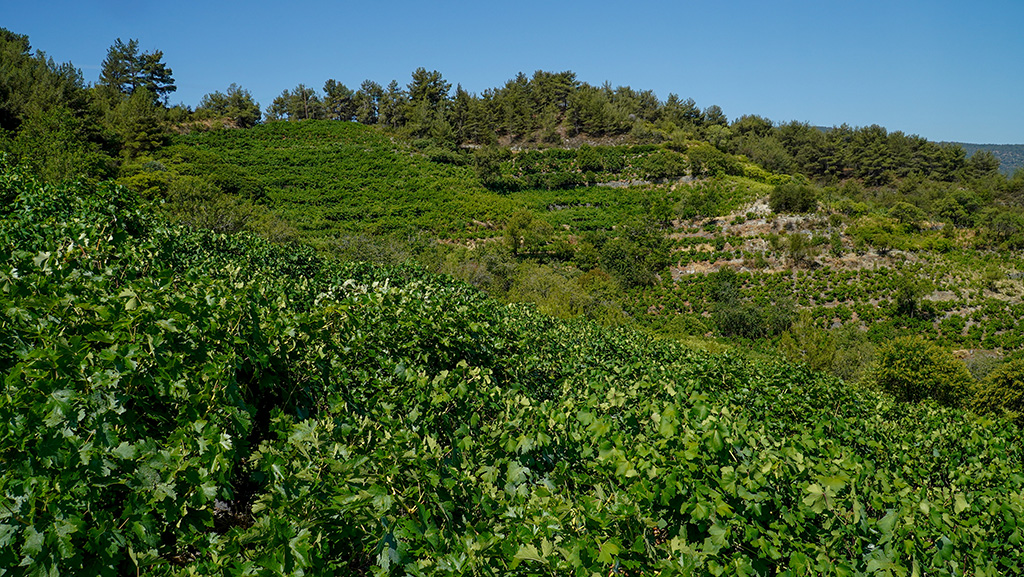
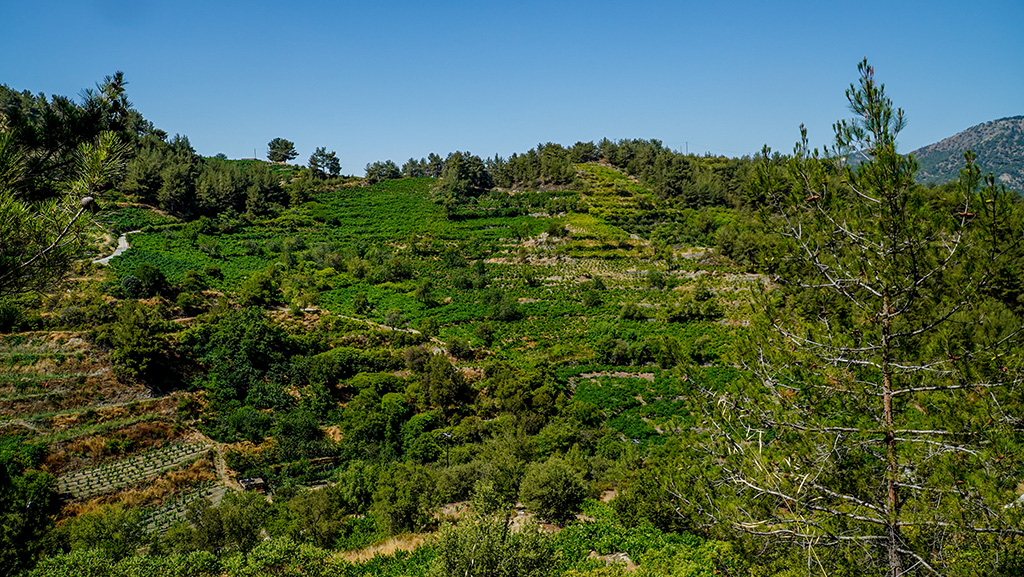
Vine growing region between Alona and Agros villages at altitudes between 1200-1485 meters where historic vineyards are located, planted there for centuries, mainly of the indigenous varieties ‘Mavro’, Xynisteri and Marathetiko. The region also features a newly planted vineyard of the Tsiakkas Winery, reaching an altitude of 1485m.
Laxia,Farmakas
The vines in Farmakas are located on steep hillsides, without terraces or dry stones. The vineyards of Santa IreneWinery are located here, at altitudes of 900 to 1350m, dominated by the indigenous varietiw ‘Mavro’ and ‘Xynisteri’. The Laxia mountain peak hosts at 1354m the highest and most difficult vines from which the winery produces wines of the Mavro variety.
The unique combination of historic vineyards at high altitudes in mineral-rich soils together with traditional viticulture and winemaking techniques, result in wines of distinct character and complexity.
Madari
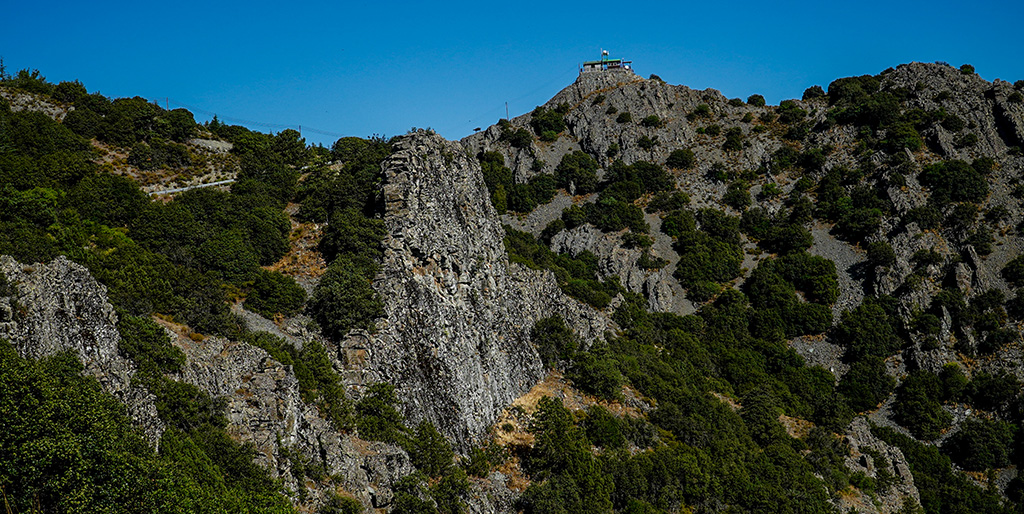
A famous peak of the Troodos mountain, at an altitude of 1,536 meters, in the Adelphi forest, to the north of the village of Kyperounda and within the boundaries of Chandria village. Madari is located on hard, igneous rocks of Troodos, mainly diabase. These rocks have withstood erosion and still stand majestically on the ridge of Troodos. At the peak of Madari stands the highest vineyard in Cyprus and among the highest in Europe, at 1,501m. Here the vines stare at the sky for centuries, on rocky soils, with slopes exceeding 40%. These vineyards provide the raw material for winemaking at the Kyperounda Winery.
Just next to the highest vineyard, stands the starting point of the famous geological nature trail called ‘Teisia tis Madaris’.
MouttitouDkia(PeakoftheZeus)
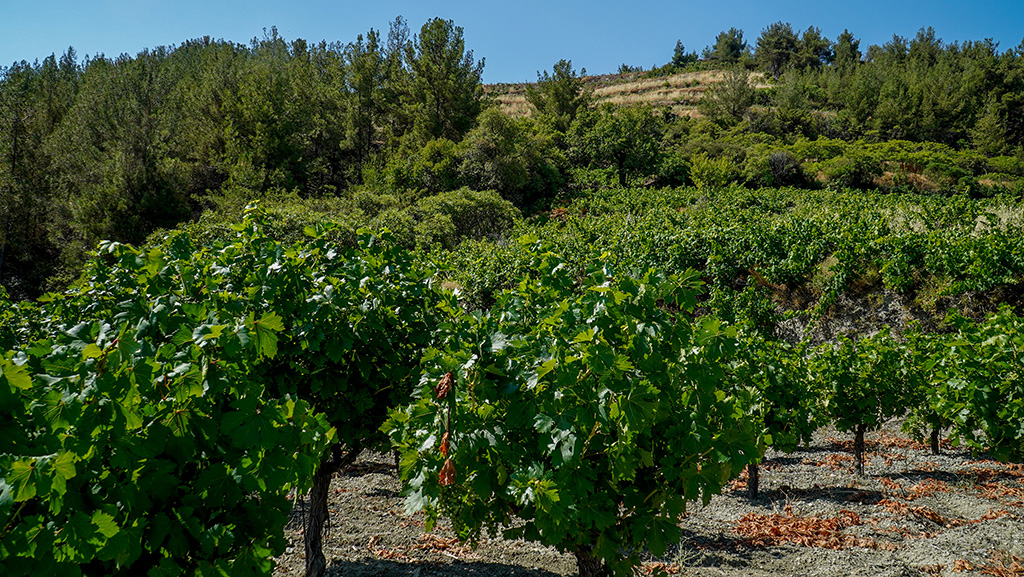
The toponym ‘Moutti tou Dia’ is a peak located at 1,346m and dominates a large mountainous area with vines planted by our ancestors, certainly more than a century ago. The region covers the southern side of Kyperounda village, characterized by vineyards surrounded by tall coniferous trees and other woody crops. Here, we find vineyards of historical, cultural and environmental importance since indigenous varieties coexist for at least a century with wild fruit trees.
Artist Series
Pinot Noir
Chardonnay
Nebbiolo
Artist Series
“2019 Giacomo Fenocchio” has been added to your cart. View cart