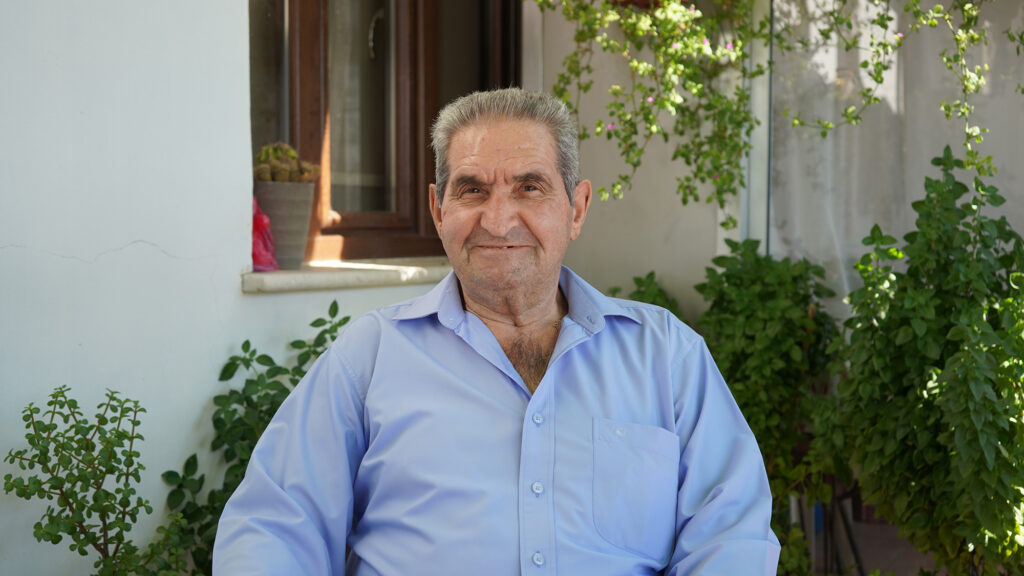
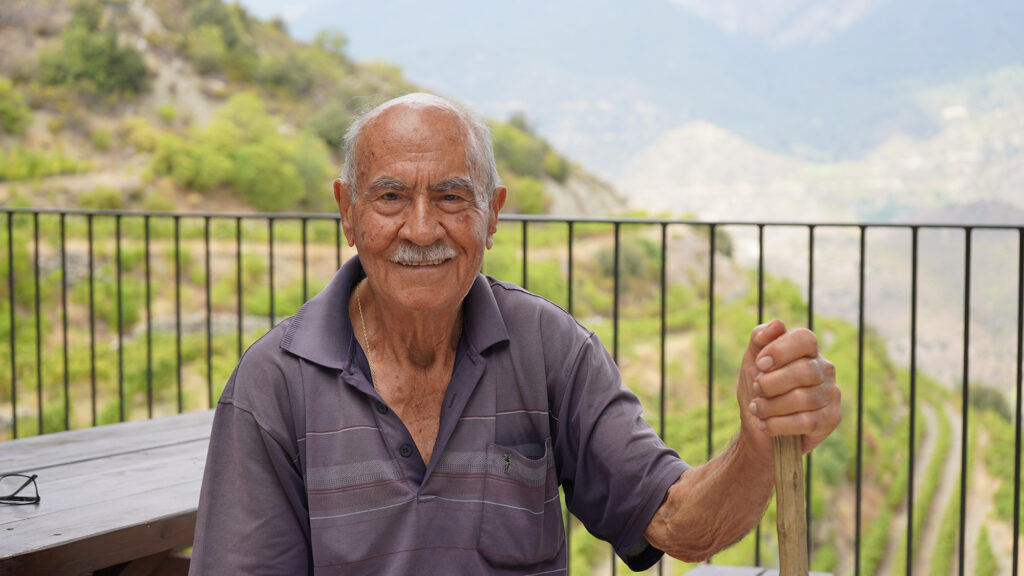
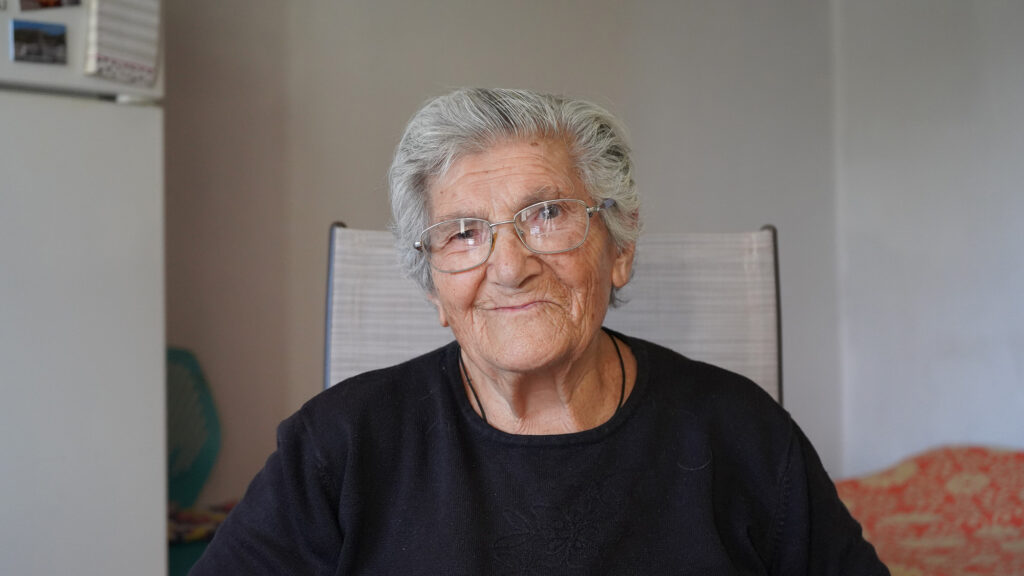
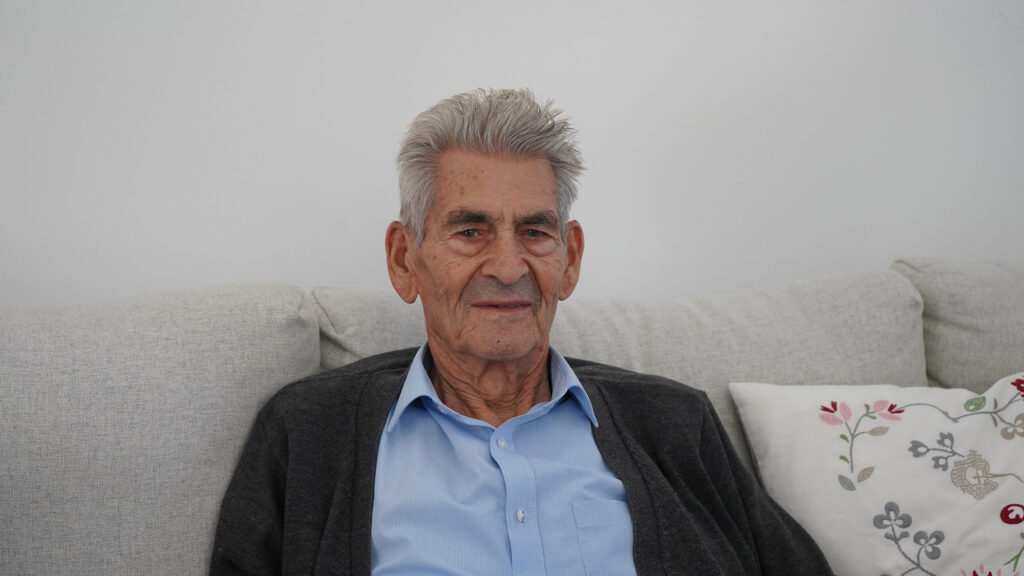
As an activity that dates back centuries, people of our regions, talk and describe their own experiences that they have lived in their vineyards. Memories etched very well in their minds since they have spent their lives on in vine growing and winemaking
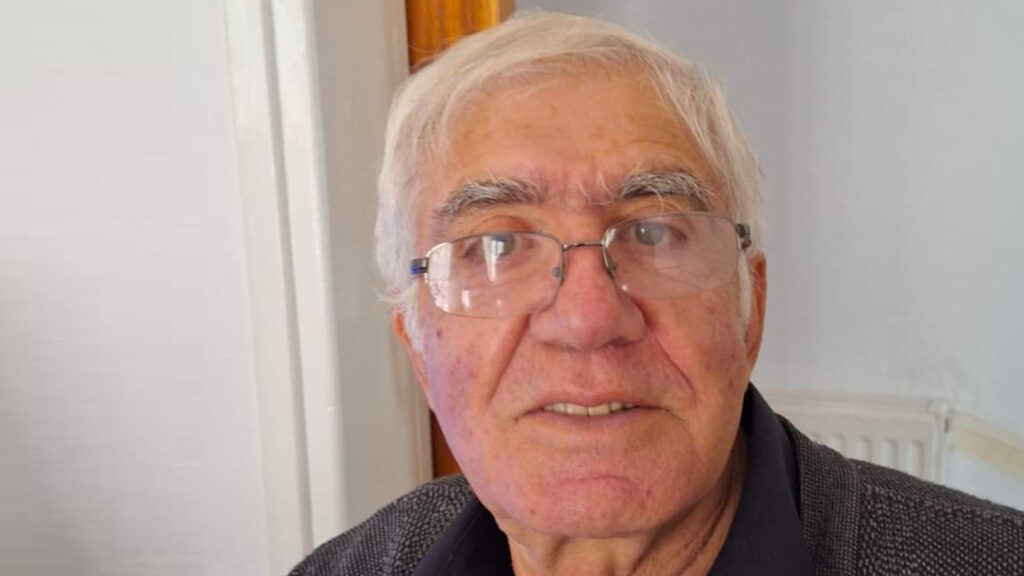
Andreas Kambouridis
80 years old | Agridia
“In the old days, we had huts in the vineyards that we used as warehouses. When it started to rain, we went inside. We had to go to the vineyard early to finish early. We went with the donkeys. When the grapes ripened between the end of September and the beginning of October, then the harvest began. At that time, we fought vine diseases with sulfur and ash. In the old days, we trod the grapes with our feet, then we brought machines and ground them and then processed them… It was customary to make palouzes, zivania, wines for the houses and delicatessens…”
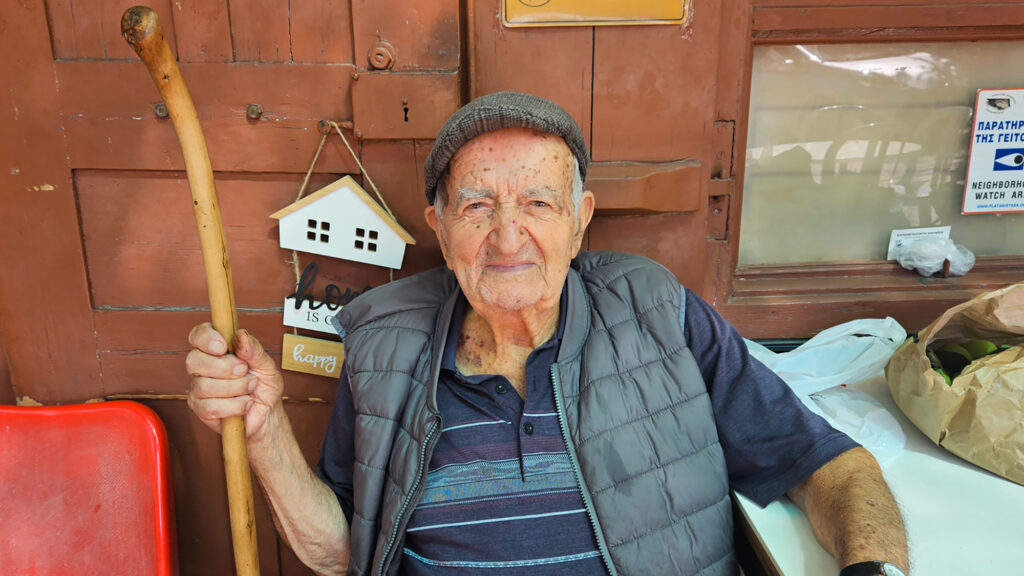
Andreas Oikonomou
94 years old | Pelendri
“For the harvest we started in the morning, to prepare the horses, load them with the crates and drive them a distance of 3 kilometers to reach the vineyard. First we sanctified the vine and then we went to the harvest. The diseases presented to us were something very serious. Sometimes we succeeded and sometimes we didn’t.”
Andreas Oikonomou
94 years old | Pelendri
“For the harvest we started in the morning, to prepare the horses, load them with the crates and drive them a distance of 3 kilometers to reach the vineyard. First we sanctified the vine and then we went to the harvest. The diseases presented to us were something very serious. Sometimes we succeeded and sometimes we didn’t.”
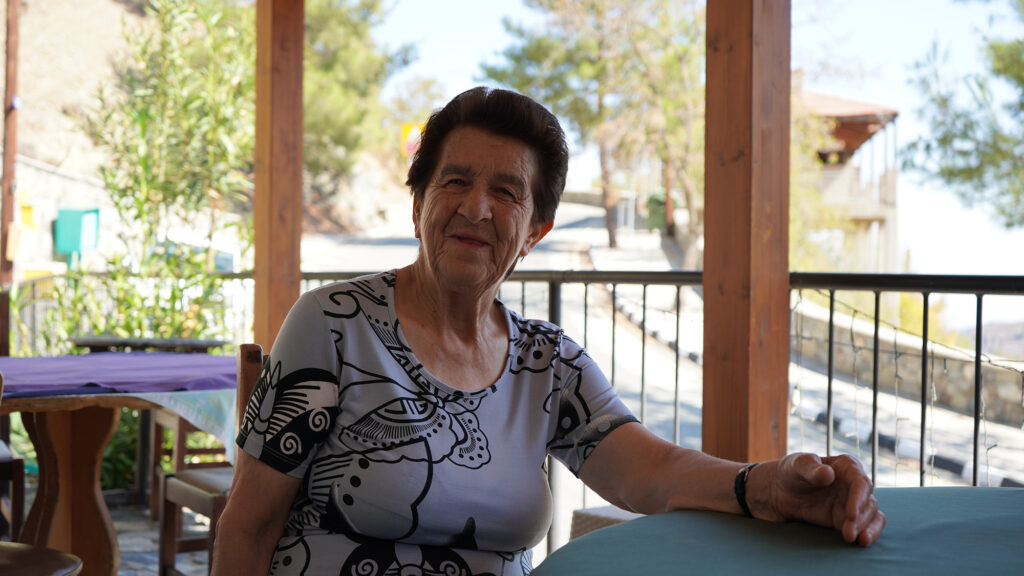
Maria Hatzigeorgiou
92 years old | Chandria
“We would get up in the morning, eat our soup and set off for the vineyard until nightfall, when the sun set. We went either on donkeys or on foot. In October, the harvest is always ready for us to start. We had no other medicine at that time except brimstone and it was much better than the medicine we use now…”
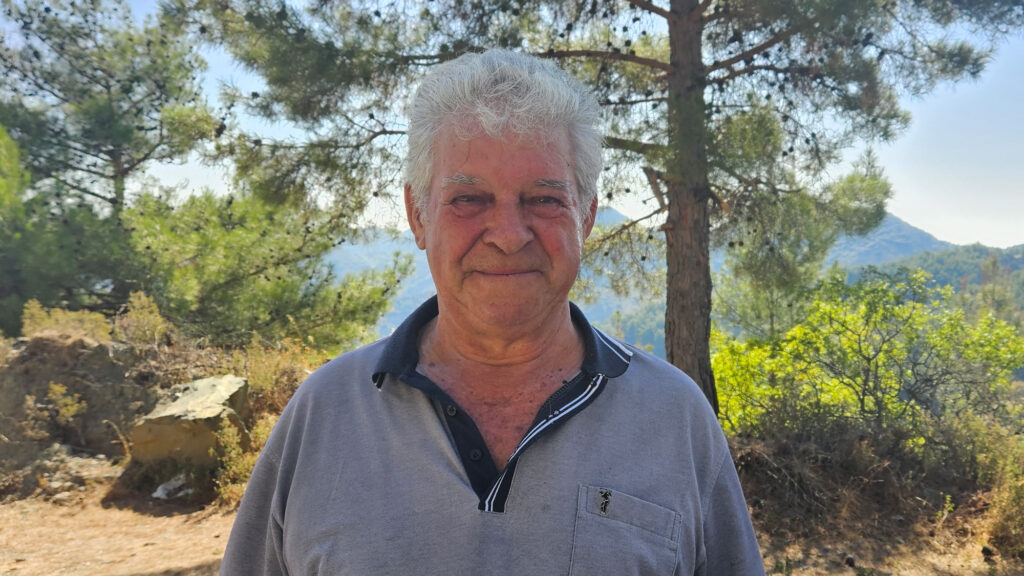
Drosos Papaeracleous
89 years old | Agros
“In the old days, everyone went to the vineyards together and those who wanted more people, also took helpers. Wine was their main income. We always went with the donkeys. In the winter we went at 8 in the morning while in the summer we went from 6. We picked the grape, if we wanted it to be sweet, then we put it down to become like a raisin, to soften. The utensils I remember were the coffins, which were either made or bought at the fairs…”
Drosos Papaeracleous
89 years old | Agros
“In the old days, everyone went to the vineyards together and those who wanted more people, also took helpers. Wine was their main income. We always went with the donkeys. In the winter we went at 8 in the morning while in the summer we went from 6. We picked the grape, if we wanted it to be sweet, then we put it down to become like a raisin, to soften. The utensils I remember were the coffins, which were either made or bought at the fairs…”
Paraskevi Erimaki
78 years old | Lagoudera
“We start pruning the vines in January and after 1-2 months we spray them for the grass. In the month of May, when our vines begin to grow and reach 20 points, then we must sulphurize it so that the grapes do not burn. Then the vine puts out a lot of leaves and we have to clean it again, spray the grapes so they don’t melt…”
Aristophanes Papaefstathiou
92 years old | Platanistasa
“We would start for the vineyard with the donkeys early in the morning, before the wind blew, around 6 in the morning and stay until the afternoon. We fought diseases with sulfur. We put the grapes in the crates and took them home in jars. Then we pressed and strained them until they were clean, leaving them for 40 days…”
Aristophanes Papaefstathiou
92 years old | Platanistasa
“We would start for the vineyard with the donkeys early in the morning, before the wind blew, around 6 in the morning and stay until the afternoon. We fought diseases with sulfur. We put the grapes in the crates and took them home in jars. Then we pressed and strained them until they were clean, leaving them for 40 days…”
Andreas Tsiakkas
72 years old | Alona
“The rain was not a problem for the vine. The damage was done by hail because it meant destruction of the grapes. Back then there were no rural roads. We went with the donkey, groups of ten people 10 from the family, even women who were pregnant. The grapes we collected were stored in cauldrons and made into a zivania. We put it inside an animal skin, treated, and then we went back to the plain to sell wine…”
Nikos Polydorou
78 years old | Polystypos
“At the time, we went to the harvest as a family while we also had help from relatives and friends. It was decided that the harvest begins when the grapes turn black, around the beginning of September. We used to sell table grapes. Some small grapes that remained, we cut them and tied them with threads on wooden beams that supported the roof of the house and saved them for the winter”
Nikos Polydorou
78 years old | Polystypos
“At the time, we went to the harvest as a family while we also had help from relatives and friends. It was decided that the harvest begins when the grapes turn black, around the beginning of September. We used to sell table grapes. Some small grapes that remained, we cut them and tied them with threads on wooden beams that supported the roof of the house and saved them for the winter”
Andreas Vasiliadis
76 years old | Sarandy
“I started working with the vineyard together with my grandfather. We went by donkey, an hour and a half journey mostly in the morning or afternoon, while in winter we stayed there almost all day. We used to decide that the harvest had started when we saw that the grapes had ripened, around the middle of October. We cut the grape before it rained, we tied it with twine at home in a cool place in 1840 jars…”
George Christodoulou
Kyperounda
“Our main occupations in the vines at that time were pruning, digging, cutting the tops, tender plant shoots, harvesting, cleaning and sulphuring. The whole family went with our donkeys. The utensils we used were the jars, the grinding machines and the improvised presses. When it started raining we couldn’t do anything to protect ourselves…”
George Christodoulou
Kyperounda
“Our main occupations in the vines at that time were pruning, digging, cutting the tops, tender plant shoots, harvesting, cleaning and sulphuring. The whole family went with our donkeys. The utensils we used were the jars, the grinding machines and the improvised presses. When it started raining we couldn’t do anything to protect ourselves…”